RFG Research Kitchen Presents
Creative Disruption
A Bold New Theory of Human Creativity
Dedicated to the art and artists who helped guide me to “the spark in time that makes imagination actionable and embeds creation into memory”
Written by Stephen Phillips and Claude
The Load-In: An Introduction to Creative Disruption
Allow me to set the stage…
Music City serial entrepreneur Mark Montgomery has a catchphrase he uses frequently across Social Media.
He often says “Nashville creates.”
But what does this mean exactly? And more importantly — what happens after?
As a native Nashvillian raised by creatives since birth, I’ve spent years meditating on the true meaning of creativity, its presence in my life, and its impact on the world.
Then in early 2025, I experienced a stunning revelation.
Memorable art isn’t just something put out into the world that resonates randomly. Creativity doesn’t happen automatically — it must be guided. For anything to truly land — to switch something on in another person, to embed itself in culture and sustain indefinitely — something must happen first.
The Spark In Time…
After asking myself a not-so-simple question I had been pondering since I could first remember.
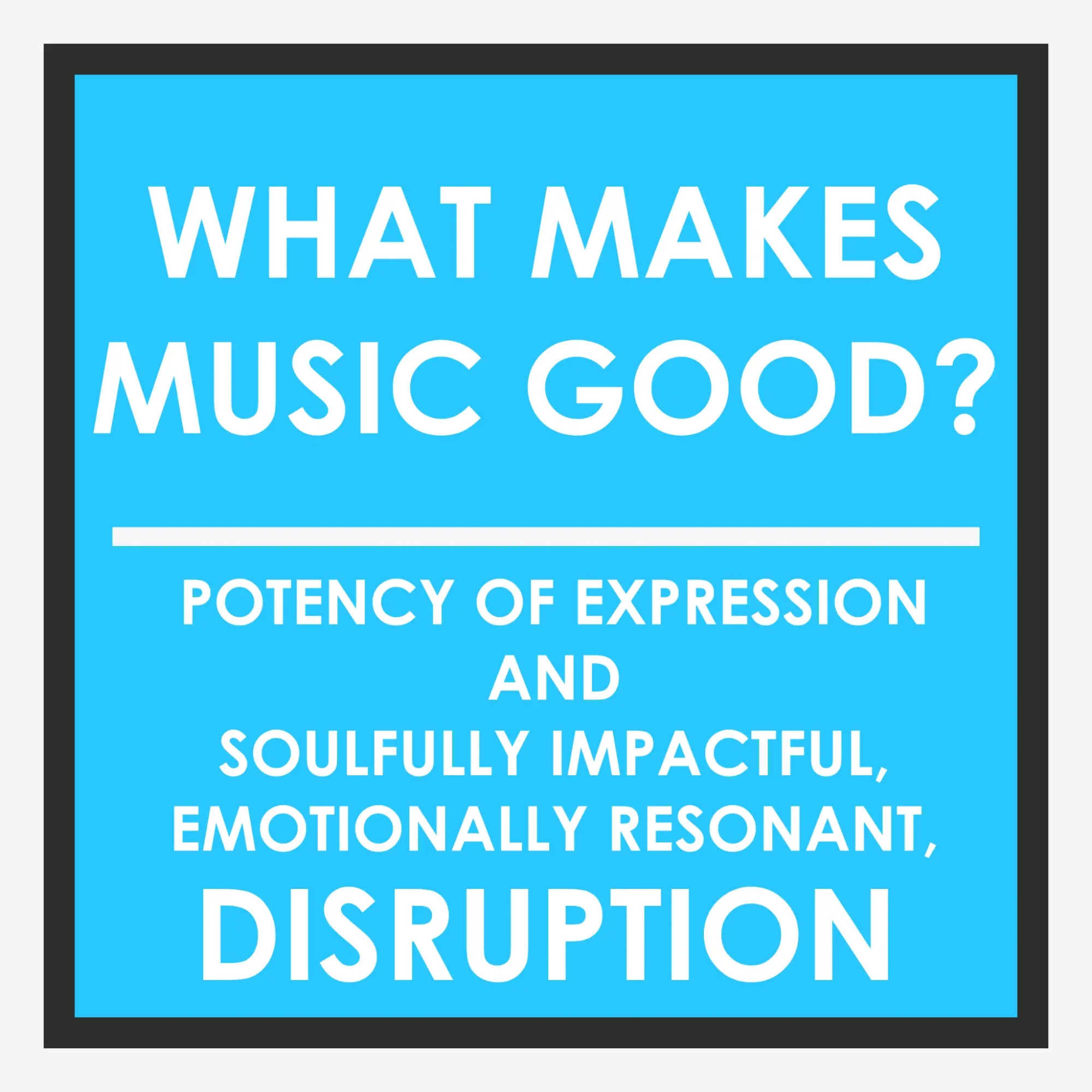
“What makes music good?”
The question that started everything
I somehow, by some kind of miracle, had finally arrived at an answer that made shockingly logical sense.
I pulled this radical rethinking of the creative process from the depths of my creative soul. I am the son of a dumpster-diving Cubist mother taken far too soon. The kid who called one of the greatest songwriters of all time his beloved Godfather. The Bicentennial Baby named after a young man who was once like extended non-biological family — an artist who would one day find himself sitting beside said Godfather on that same Pantheon of Americana Music.
Pattern recognition runs through my blood — a unique ability to see what many others cannot. Not just in the workplace. Not just on a fretboard… everywhere.
“The lasting quality of any art is relative to the potency of its expression — often on first impression — and its resulting reaction of personally impactful, emotionally resonant disruption.”
I named my discovery Phillips’ Law. And the theory that quickly bloomed from within it: Creative Disruption.
It Came From Nashville
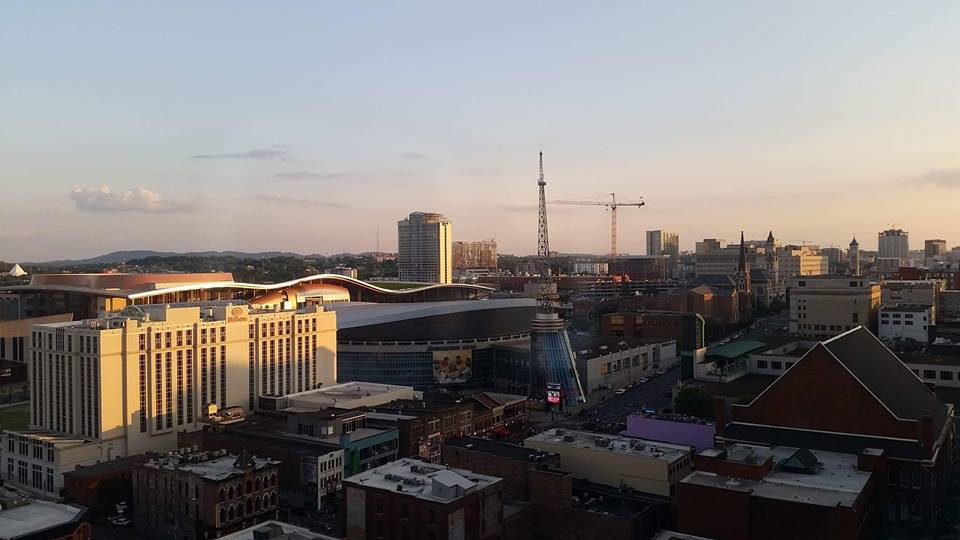
While Nashville has indeed “created” for years, not everything in Music City has always hit with pocket timing or perfect pitch.
Before Nashville became a popular It City — before the drunken bachelorettes and celebrity honky tonks — the former quaint tourist town once battled Branson, Missouri for its very cultural life. And it went through a staggering amount of failure to get where it is today.
“The Nashville Curse” was defined by marketing mishaps, the harakiri of fandom gatekeeping, and missed opportunities.
Downtown’s theme restaurant era — Planet Hollywood, NASCAR Cafe — arrived with fanfare and vanished without ceremony.
Gibson Guitar, one of the most iconic names in the history of music, almost went out of business — driven by narcissistic micromanagement that nearly killed a heritage brand half a billion dollars in debt, with a series of unfortunate leadership decisions slowly driving it off the cliff of bankruptcy.
And Nashville — Music City, the beating creative heart of American sound — closed its generationally beloved Opryland theme park.
To build a mall.
So what separates creative commerce that fails from the creativity that sustains indefinitely?
While Nashville does indeed create, for anything to sustain — for anything here or anywhere to find a groove — there must first be:
DISRUPTION.
A Brief Word About “Disruption”
Many of you have seen the word “disruption” plastered across the headlines for years, and you’ve increasingly felt a sense of unease because of the words that often follow…
Disruption in the supply chain. AI disruption of the workforce. Market disruption. Creative destruction.
In mainstream usage, disruption has become almost entirely threat-coded. It is what happens to you — externally, without your consent, usually at the worst possible time. Something you were counting on gets yanked away. The word has been weaponized by tech culture, economic anxiety, and the 24-hour news cycle until it triggers a stress reflex before your brain even finishes reading the sentence.
That’s not what we’re talking about here.
In Creative Disruption, disruption is not the end of something. It is the very beginning of everything.
It is the interruption of the expected — which is the only way anything meaningful ever gets through. Your nervous system is wired to ignore the predictable. It notices what breaks the pattern. That’s not a bug. That is the entire mechanism.
Love disrupts. Flavor disrupts. Art disrupts. The Guided By Voices melodies such as “Glad Girls” that instantly embed into both the heart of a child and the aural memory banks of the most cynical hipster alike — before the brainworm is firmly implanted (ala’ Ricardo Montalban feeding the Ceti eel into Chekov’s ear canal in The Wrath of Khan), DISRUPT.
Love, flavor, art, music — all these experiences resonate powerfully in the human mind because they disrupt first.
Phillips’ Law identifies that sudden moment of inspiration — the very first burst in the human creative process — triggering a powerful chain reaction that, under the right conditions, sustains indefinitely.
This sometimes endlessly complex process of creative discovery has sparked everything and everyone from Captain Beefheart to Beyoncé Knowles to The Earl of Sandwich.
Creative Disruption — The Current and The Currency
Think of Creative Disruption as an electrical current.
It flows through human beings — through ideas, through works of art, through moments of genuine connection. When a Spark ignites, something turns on in another person. The current is live. When creativity is suppressed, dismissed, or automated away, the circuit breaks. Something goes dark. And when the current sustains across time, across generations, across the people who carry it forward — that is the Inferno. Self-feeding. Self-amplifying. The current that no longer needs its original source to keep burning.
Every human being is a Node in this current. Not just artists. Not just performers. Not just professionals.
Everyone.
Creation comes standard with being human. You don’t need to be elite, famous, or technically skilled — you could even articulate the idea and delegate the execution. All you need is to be in sync with your creative rhythm, and to know what to do when the muse inevitably strikes.
That knowledge starts with one non-negotiable rule:
GET THE IDEA DOWN,
IMMEDIATELY.
Write on your arm. Take a picture. Grab a notepad — or open Notepad. A Post-It. A voice note. Your Notes app.
You can even tell a trusted friend to get invaluable feedback in real time.
Document the spark at the point of ignition — or it can be lost. Forever.
Creative Disruption can be both carefully governed and ambitiously accelerated in real time — primarily through the power of accumulated knowledge and pattern recognition.
The mechanism has a name. It has a lifecycle. And once you see it, it cannot be unseen.
The Creative Disruption Life Cycle
Creative Disruption is a process flow. A sequence of events, each dependent on the last, that moves a creative Spark from the moment of ignition into permanence — or loses it somewhere along the way.
Think of it as a circuit. The current moves through three stages. Each one must hold for the next to be possible.
Stage One: The Spark (So Shall We Start?)
It all begins with a spark in time. This is the precise moment imagination becomes actionable.
But here is what most creativity theory misses entirely: the creator is always the first person disrupted by their own work. Before the audience hears it. Before the world decides. The Spark hits the creator first. This is Spark Genesis — the originating creative impulse that can only be described as embryonic creativity. The full blueprint of what the work will become is already present in that first moment of contact. The creator is its first environment. Work that did not genuinely disrupt its creator tends not to genuinely disrupt others — the authenticity of the hit is detectable by receivers, even when they can’t name why.
“Music is always for the listener, but the first listener is always the musician.” — Wynton Marsalis
You don’t schedule a Spark, and it can arrive when you least expect it. Not a vague feeling. Not a passing mood. Something specific, sudden, and charged with endless possibility.
The moment the Spark ignites, something else begins: Spark Flow. The directional movement of creative energy from its point of origin outward through the circuit — from the creator’s mind toward the world, toward other Nodes, toward the Ignition that makes it real. Spark Flow is what the current looks like in motion. It can be directed, accelerated, and governed.
[This is why it is critical that you get your original idea down in or in close proximity to, the moment.]
The reach of any Spark at a given moment is its Spark Radius — the blast zone of active influence. Not follower count. Not nominal reach. The zone within which a Spark’s detonation produces real ignition events in receiving Nodes. Spark Radius is dynamic: it expands and contracts based on depth of trust, density of Active Receivers, domain alignment, and cultural timing. When all four align, the blast zone detonates at scale. What the world calls “viral” is Spark Radius firing at maximum capacity into a prepared field.
Sparks also travel. One Node ignites another. A creator’s work lands in a receiver, who becomes a transmitter, who carries the current into new rooms, new generations, new contexts entirely. This is the Spark Jump — and it’s how movements begin, how genres are born, how one conversation in the right room can change everything.
Sparks can also find each other. Spark Convergence occurs when two independent Sparks are drawn together by mutual recognition of quality. It takes two formations: Proximate Convergence — two fires burn near enough to affect each other without merging, each retaining its identity while burning hotter for the proximity (the canonical example: Sgt. Pepper’s Lonely Hearts Club Band and Pet Sounds, made simultaneously, each crew aware of the other, both pushing what was possible) — and Intersecting Convergence, where two Sparks cross and produce a hybrid artifact that belongs to both origins simultaneously (Anthrax and Public Enemy’s “Bring the Noise” — definitively both and neither; something new was born at the crossing).
Stage Two: Ignition (aka “The Inner Mounting Flame”)
Ignition is the embedding. This is when the Spark becomes real — when the creation leaves the mind and enters the world in a form that can be received, remembered, and replicated.
Before Ignition, there is quality control: Emotional Governance.
The “Mixing and Mastering” of Emotional Governance
Emotional Governance is the first layer of quality control — the internal mechanism that determines whether a Spark crosses into Ignition, gets caught in Spark Delay, or dies somewhere in the creative process.
Ron Sexsmith captured the tension perfectly in his song “This Song,” asking the question every creator eventually faces:
“For every song you ever heard, how many more have died at birth?” — Ron Sexsmith, “This Song”
That is Emotional Governance. The moment of truth.
Is the work true? Is it potent? Is the expression honest enough to actually disrupt something in another human being?
In musical terms: imagine being in a studio, trying to get your sound right before you let it leave the room. That is the work of Emotional Governance — the internal QA mechanism that maintains fidelity to the original Spark before Ignition commits. Not audience optimization. Signal fidelity. The target is always the original creative intent.
Mixing — Balancing the Levels
Emotion, timing, execution, cultural context — all adjusted against each other and against the original Spark. The question at every adjustment:
Is this still true to what I first heard?
Receiver response is used only as a fidelity check — confirmation that the signal is transmitting clearly — never as a redirect. Tuning is implicit here. You can’t balance levels on a signal you haven’t found yet.
Mastering — The Final Pass
The last human quality check before the gate opens. The work optimized for the room it’s about to enter. The moment where the QA mechanism either clears the Spark or sends it back to Mixing.
The gate doesn’t open until Mastering signs off.
Where Things Fall Apart
Not for lack of effort. Not for lack of talent. Failed Emotional Governance.
Stage Three: Inferno (The Perpetual Burn)
When a Spark survives Emotional Governance and achieves genuine Ignition, it enters the Inferno.
The Inferno is the sustained burn of creativity.
Beneath the abandoned streets of Centralia, Pennsylvania, a coal mine fire has been burning since 1962. No visible flames. The ground is warm. Smoke rises through the cracks. The fire does not care that no one is watching. The Inferno operates the same way — the ongoing creative life of a work, an artist, a brand — anything that has achieved genuine cultural embedding.
It is what we mean when we say something has a legacy. When a catalog keeps selling forty years after it was recorded. When a painting moves people who weren’t born when it was made. When a phrase enters the language and nobody remembers where it started.
The Inferno can be tended. It can be accelerated. It can also be threatened, disconnected, or extinguished entirely — by forces both external and self-inflicted.
And this is where the Yeet Taxonomy comes in. But we’ll get there.
A Quick Word on Creative Disruption Mechanisms
This article is intended as a relatively brief introduction to a much wider subject. What you are reading is a distillation. Outside of this article, Creative Disruption is being explored in formal documents written for academicians, professional creatives, and practitioners across industries. The full framework — Phillips’ Law of Creative Disruption — is a working theoretical paper that maps every mechanism, every case study, and every implication in depth.
The definitions introduced here are core elements of the model. Here is the vocabulary you will need to know to follow what comes next:
Node
Every human being is a Node — a transmitter and receiver of creative current. Not just artists. Not just professionals. Everyone. Nodes don’t require credentials. They require contact with a live Spark and the willingness to carry it forward.
Spark Genesis
The originating moment of creative disruption — when the creator is first disrupted by their own work. Embryonic creativity. The full blueprint of what the work will become is already present at the moment of origination. The creator is its first environment. The framework’s primary quality signal: if the creator wasn’t hit first, the Spark isn’t live.
“Music is always for the listener, but the first listener is always the musician.” — Wynton Marsalis
The Spark
The first moment when imagination becomes actionable. Receiver-indexed. Emotionally charged. The current switching on. The Spark begins with YOU.
“Music is always for the listener, but the first listener is always the musician.” — Wynton Marsalis
Spark Flow
The directional movement of creative energy from its point of origin outward through the circuit. What the current looks like in motion. It can be directed, accelerated, and governed.
Spark Jump
When a new creative force enters an ecosystem and elevates the ceiling of what it produces. How movements begin. How genres are born. How one conversation in the right room changes everything.
Spark Radius
The blast zone of active influence at any given moment. Not follower count — active ignition. The zone within which a Spark’s detonation produces real disruption in receiving Nodes. Governed by depth of trust, density of Active Receivers, domain alignment, and cultural timing. When all four align, the blast zone detonates at scale. What the world calls “viral” is Spark Radius at maximum capacity.
Spark Transference
The movement of creative DNA from one Node to another, leaving a permanent mark on both. The receiver is changed by the contact. So is what they make next.
Spark Boost
A Node who deliberately amplifies another’s Spark toward a wider audience. Directional. Intentional. The Booster does not claim the fire — they route it. The connector who takes a genuinely disruptive act and routes it into a wider infrastructure. Taylor Swift platforming Sabrina Carpenter to an audience of millions at the Eras Tour is Spark Boost at its most consequential.
Spark Convergence
Two independent Sparks drawn together by mutual recognition of quality. Two formations: Proximate (fires affect each other without merging — Sgt. Pepper / Pet Sounds) and Intersecting (two Sparks cross and produce a hybrid artifact belonging to both — Anthrax / Public Enemy, “Bring the Noise”).
Convergence Point
A physical or virtual location where independent Sparks accumulate and fires begin affecting each other. Not a metaphor — a real phenomenon. Seattle/Sub Pop. Athens, GA. A Discord server. A research lab. A conference. The internet changed geography; it did not end the phenomenon.
Nexus Point
A specific person or site where multiple Spark lines cross simultaneously, producing something that belongs to the intersection itself. Unlike a Convergence Point (a location), a Nexus Point is often a single Node at the center of multiple creative currents. When that Node is lost, the crossing is permanently altered.
Spark Respawn
A Spark — brand, artist, or creative work — that was genuinely dormant or cold, reactivated. Often by external Node clusters rather than the original source. Distinguished from Yeet recovery: the fire went genuinely cold before returning. Inspired by the video game mechanic of a player’s life being fully restored. You don’t respawn at half health. You come back at full capacity, ready to play again.
Ignition
The moment of embed and resonance. When the Spark becomes real in the world and lands in another consciousness.
The Inferno
The sustained burn. The self-feeding creative legacy that outlasts its origin.
Emotional Governance
The quality gate between Spark and Ignition. And the ongoing mechanism that tends the Inferno.
Creative Distraction
A deliberate creative choice — spectacle, persona, provocation — that stages the Spark and deepens the Embed. Always intentional. When it works, it amplifies. When it fails, it generates noise without current.
The Sustainable Bag
Creative and economic equity that compounds over time. Built on evergreen work, often of exceptional quality. The long game. The current that keeps paying out.
The Common Yeet
The parent mechanism of the full Yeet Taxonomy. A stop event — driven by specific intent — that interrupts the creative current. Applicable to people, brands, movements, and institutions at any scale. Not a sentence. A circumstance. And in most cases, restartable.
Yeet
The mechanism by which creative works and their originators are displaced, disconnected, or extinguished from the cultural circuit. The Yeet is a stop — not a slowdown, not friction, not a Spark Delay. A cessation of current, most often driven by specific intent, internal or external. The Yeet is not a sentence. It is a circumstance. Critically: most Yeets are restartable. The stop becomes permanent only when compounding formations or time and indifference carry it all the way to The Final Yeet (The Coco).
A Yeet can be internally driven — you slow your own progress — or externally driven — the world does it for you. Many Yeets are preventable. Choose wisely.
The Final Yeet (The Coco)
The terminal state of the Creative Disruption lifecycle. Not physical death. Not cancellation. Not commercial failure. The Final Yeet occurs when the last living Node carrying a Spark loses it — when no active circuit holds the memory any longer. Complete erasure from living memory. The current does not flicker. It simply ceases. The Spark is gone forever. Named for the concept of the second death in the film Coco — the moment you are forgotten by the last person who remembered you. Every Node that carries a Spark forward is a stay of execution against The Coco.
“Humanity fuels and FEELS the spark. If forever hidden, there’s neither light nor heat.” — Stephen Phillips
Surge
A sudden intensification of creative energy around an existing Spark. Not a new Spark. Not Ignition. The original current running hotter. Surge occurs when a Spark that has been sustaining — or even idling — hits a new peak of cultural velocity, commercial momentum, or creative output.
The Barrier Yeet
The Yeet that never announces itself. The Spark couldn’t complete its circuit not because it was refused, but because something in the architecture — institutional, structural, perceptual, temporal, financial, or self-imposed — prevented convergence. No villain. Just obstruction.
Knowing Ball
The active deployment of deep, specialized knowledge and pattern recognition to direct Spark Flow. You don’t have Knowing Ball. You know Ball — or you don’t.
The Complete Yeet Taxonomy — Preview
The Yeet is one of the most critical mechanisms in Creative Disruption. It takes fifteen distinct forms — each one a specific way the current gets stopped. Part Two will explore all fifteen in full. Here’s what you need to know now.
| Yeet Type | The Stop |
|---|---|
| The Common Yeet | The universal stop. The parent mechanism from which all other Yeet formations flow. |
| The Transference Yeet | The same network that spread your spark spreads the damage. |
| The Self Yeet | You become the instrument of your own disruption. |
| The Deception / Transference Yeet | The brighter you burned, the more you hid. The reveal comes eventually. |
| The Collective Denial Yeet | A group agrees not to see what will ultimately destroy them. |
| The Brand Betrayal Yeet | You break the promise the people who chose you were counting on. |
| The Dual Abandonment Yeet | One side stops caring. The other quietly leaves. |
| The Bot Yeet | Human creativity is replaced by automation. The spark never gets a chance to fire. |
| The Migratory Yeet | The conditions stopped serving the spark. The spark moves. |
| The M&A Yeet | Mergers and acquisitions eliminate what they call redundant. |
| The Pre-emptive Damage Yeet | The only Yeet you run on purpose. You catch the ember before it spreads. |
| The Bad Behavior Yeet | Conduct lands in a courtroom. The spark competes with documented reality. |
| The Pre-Seeded Cancellation Yeet | Old behavior surfaces at exactly the wrong moment. |
| The Ball Drop | A failure to deploy what you know at the critical moment. |
| The Barrier Yeet | The circuit couldn’t close. Not rejection. Obstruction. |
Terminal states — The Final Yeet (The Coco) and Finality — sit outside the numbered taxonomy. Full definitions in Part Two.
A note on language:
Yeet, getting the Bag, Knowing Ball — these terms originate in Black American culture. Yeet emerged from Black internet culture around 2014, made Merriam-Webster in 2022. Getting the bag comes out of hip-hop. Knowing Ball is rooted in the kind of deep game fluency that Black sports and music culture have long named and honored. I grew up in Nashville’s inner-city schools during the Golden Era of Hip-Hop and I still keep my ear to the culture. These words are not borrowed for effect. They are precise. That precision has a source, and the source deserves acknowledgment.
When Creative Disruption Met the Software Development Life Cycle
I have spent years working in information technology — governance, enterprise systems, SharePoint, process improvement. I think in workflows, pipelines, and lifecycle stages. I think in the language of how complex systems move from conception to deployment to maintenance to eventual deprecation.
So when Creative Disruption began to take shape as a framework, something suddenly stopped me in my tracks.
The structure was identical.
The Software Development Life Cycle — the foundational process model that governs how technical systems are built, deployed, and maintained — maps onto the Creative Disruption Life Cycle with a precision that is not metaphorical. It is structural. The phases align. The failure modes align. Even the terminal states align.
| SDLC Phase | CDLC Equivalent | The Question It Answers |
|---|---|---|
| Requirements | Creative Intention | What is the creator attempting to communicate? |
| Design | Craft and Form | What vehicle will carry the Spark? |
| Development | Production / Execution | Is the execution adequate to the intention? |
| Testing | Emotional Governance | Does the work perform what it intends without distorting the Spark? |
| Deployment | Release / Performance | When and how does the work reach its receivers? |
| Maintenance | The Sustain | How does the work continue generating value over time? |
| Deprecation / Legacy | The Yeet / Finality | What is the ultimate fate of the work and the creator? |
This is not a party trick, nor is this a Big Tech industry outsider reaching for an analogy to sound more credible in a LinkedIn post.
This is the IT professional in me recognizing a pattern I had seen before — in a completely different domain — and understanding that the reason these two systems look alike is because they are. Both are frameworks for moving something from imagination into the world, keeping it functional and valuable over time, and managing what happens when it inevitably reaches the end of its viable life.
The creative process has always had a lifecycle. We just never had the language to govern it the way the technology world governs its own.
CDLC gives it that language. And the fact that a musical micro-influencer who works in IT found the parallel is, in itself, a major Spark Jump.
The Fine Art of Knowing Ball
Knowing Ball is not a credential. It is not a degree, a title, or a years-of-service badge. It is pattern recognition deployed in real time — trusting the current before the world confirms it exists. I have countless receipts proving this talent. Here is one of many.
Case Study — Zappalachia · 2011
A Belmont music student I met at a West Nashville bagel shop in the 90s handed me two mixtapes. Garcia/Grisman and Frank Zappa shared the sides of one cassette (the other was live Phish). Pattern recognition fired: virtuoso acoustic musicians plus radical composition equals something that doesn’t exist yet.
What if the world’s greatest Bluegrass and Newgrass virtuosos recorded an anthology of Frank Zappa compositions with all-acoustic instrumentation?
Chris Thile. Bela Fleck. Jerry Douglas. Mark O’Connor. Edgar Meyer. Grammy material. The name arrived with the concept: Zappalachia.
July 25th, 2011. Laid off, nothing to lose. I transmitted the vision through a frayed Spark connection. It jumped a sizeable family rift between acrimonious siblings and landed directly at the Zappa Estate in less than 24 hours. The move was the only move — the Estate was notoriously litigious. It had to come from them.
Gail Zappa responded: “Yes I do think this is funny and also a great concept.”
Fast-forward, Spark Delay.
Fast-forward again. UMG acquires The Zappa Estate — catalog, Vault, the mustache, all of it. Zappalachia is now obstructed by a Great Barrier and an M&A Yeet, respectively. The producer in the “magic cape” is still delayed, still on their way, just years behind but perhaps arriving sooner than later, and weirdly right on time.
Zappalachia is inevitable. The world’s greatest Bluegrass and Newgrass musicians crave challenge. The blueprint is drafted. The circuit is pre-assembled. One viral Billy Strings performance of “Inca Roads” or “Eat That Question” and the live music scene immediately combusts across the Internet.
The Spark of Zappalachia has been alive since 1997.
That is Knowing Ball.
You don’t have to be famous to create your own big ideas.
You just have to read the patterns and connections.
The Creative Disruption of Beatlemania
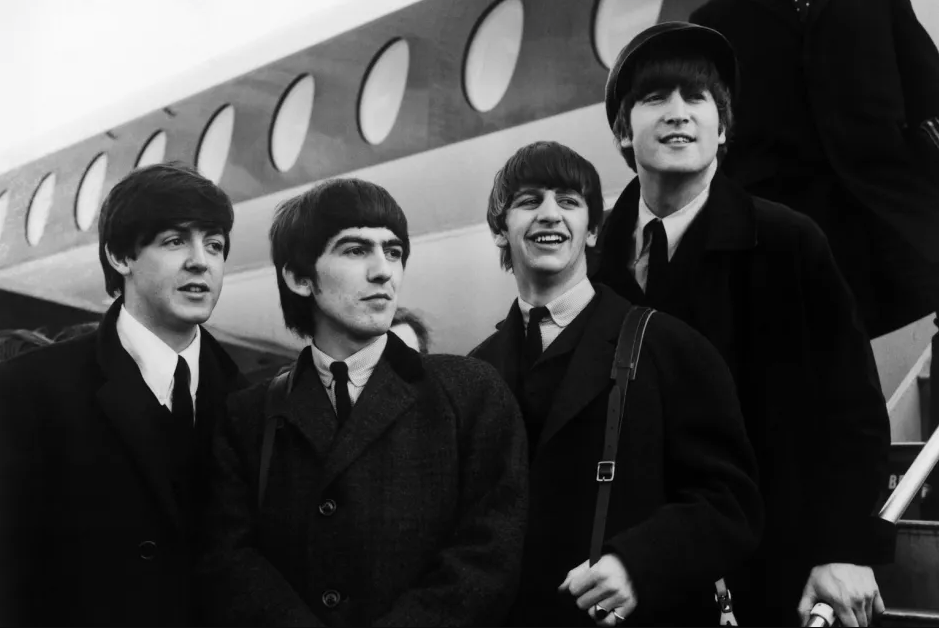
Across sixty years of music history. From a basement in Liverpool to a legacy that has never stopped.
The Spark
Liverpool. Hamburg. The Cavern Club. Four young Nodes — Lennon, McCartney, Harrison, Starr — finding each other in the kind of circumstances that can only be called creative destiny.
What made this Spark unusual was its mutual amplification. Lennon and McCartney didn’t just spark independently — they sparked each other. Each raised the ceiling of what the other thought was possible. A co-Spark engine of a kind that comes along perhaps once in a generation. The current between them was extraordinary.
Ignition
The timing was not incidental. The Beatles arrived in America in February 1964 — less than three months after the assassination of John F. Kennedy. The country was in collective mourning, its attention anhedonic, its emotional circuitry raw and receptive in ways it had not been before and would not be again. Into that specific cultural vacuum came four young men from Liverpool with matching suits, impossible melodies, and an energy that was the precise opposite of grief.
The Ed Sullivan Show
This is Ignition in its most explosive form. The world received the Spark — not passively, but viscerally. Girls screamed. Parents flinched. Radio programmers scrambled. The embedding was immediate and irreversible.
You couldn’t un-hear The Beatles after February 9th, 1964. The Spark had passed through Emotional Governance with full marks and blown the gate off its hinges. The current was live at a civilizational scale.
The Inferno — The Yeet — and Creative Distraction
What followed was one of the most sustained Infernos in the history of popular music.
But here is where it gets instructive.
In 1966, John Lennon told a journalist that The Beatles were “more popular than Jesus.” The backlash was immediate and severe. Many radio stations across America banned their records. Albums were even destroyed in public protests organized by religious leaders. The band stopped touring entirely.
In Creative Disruption terms, this was a YEET event — an external force that disconnected the circuit in a specific and dramatic way. But the Yeet is not a sentence. It is a circumstance, and in many cases, recoverable.
Forced off the road, every watt of that creative current had nowhere to go but in the studio. The Yeet that produced the backlash led to Sgt. Pepper’s Lonely Hearts Club Band. The disconnection triggered the most concentrated creative period in the band’s history.
The Inferno didn’t go dark. It was about to become a supernova.
The Sgt. Pepper era also brought something the framework calls Creative Distraction. The kaftans, the facial hair experiments, the full psychedelic wardrobe. The Magical Mystery Tour. Yellow Submarine.
These were not accidents. They were deliberate creative choices — intentional acts of staging, spectacle, and provocation made by four humans testing the boundaries of their own legacies in the making. The 1960s counterculture was itself a galaxy of Creative Disruptions colliding in historically unprecedented ways. The Beatles were not drifting into the maelstrom. They became unwitting architects helping to build pop culture as we know it.
Creative Distraction works when the surface spectacle IS the argument. When the costumes, the films, the provocations deepened the Embed rather than replacing it. For The Beatles in this period, it did all this and more. The core Spark was real enough to sustain everything they threw at it.
Meet The Yeetles — The Swift End of a Not So Long and Winding Road
In 1970, The Beatles broke up.
The original circuit that had sustained one of the greatest Infernos in human cultural history was disconnected. The four Nodes separated as a unit.
However, the Yeet that broke up the Beatles was a dispersal, not a death. In fact, bands break up more often than not. One of the most legendary Yeets of all-time could fall into the category of being seen as Common.
Each Beatle became a legendary Node in their own right, carrying embedded creative DNA into new circuits. McCartney built the Sustainable Bag — Wings, solo albums, a touring career spanning decades, a catalog that keeps generating. The current has never stopped for him.
Lennon’s story demonstrates Finality — the inevitable exit of the original conductor, carrying no judgment and no failure, only the permanence of what he left behind. A creative life cut short at its most artistically potent moment, but whose Spark has never stopped jumping. Imagine is still the song. It will always be the song. The current runs without him, because what he embedded was real enough to run forever.
Harrison’s Spark burned quietly and profoundly. A solo career that surprised everyone who may have underestimated him. The Concert for Bangladesh. All Things Must Pass. Financing Monty Python & The Holy Grail. The Traveling Wilburys. The long burn of a Node who had always been more than just a supporting player, finally with the circuit all to himself (and Ringo on occasion).
The Legacy Sustains
Peter Jackson’s 2021 documentary Get Back did something the Inferno rarely gets to do — it recontextualized a mythologized moment in real time, turning the most famously fractious chapter of the Beatles’ story into evidence of something warmer, more collaborative, and more human than the legend had allowed. Now and Then — an artifact of the original Spark, completed across decades — was released in 2023. Four biopics are currently in production focused on the life of each Beatle.
Giles Martin — son of the legendary Beatles producer Sir George Martin — has spent years remixing and remastering the catalog with the authority of inherited understanding, ensuring each new generation receives the Spark at full fidelity.
And “The Fab Four” Inferno is self-feeding. Decades after the Nodes dispersed, the original Creative Disruption keeps switching something on in listeners who weren’t born when it was recorded. Beatles offspring Dhani Harrison has worked in Beatles related video game development (Beatles Rock Band). Sean Ono Lennon, when not stewarding his parents’ legacy, collaborates with artists as stylistically disparate as The Lemon Twigs and Les Claypool, both immensely disruptive and brilliant in their own right.
There is no natural ceiling on the Sustain.
That is what Creative Disruption, when it achieves perpetual burn, actually looks like.
That is the lifecycle — complete.
The Infinite Yeet of Kanye West
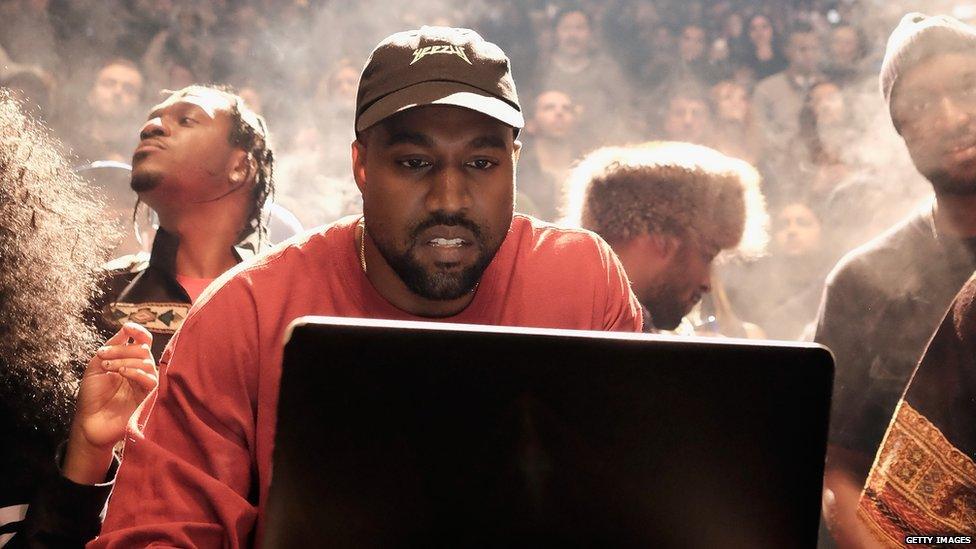
A Cautionary Tale About the Tragic Absence of Emotional Governance.
What follows is not a takedown. It is a case study in the tragic absence of Emotional Governance — at every level of a creative ecosystem simultaneously. The Node. The network. The institutions. When Emotional Governance fails that completely, across that many years, this is what the lifecycle looks like.
The Spark — and the Wound
Chicago. A producer’s mind in a rapper’s body, told by every label that the combination didn’t work. Then in 2004, a near-fatal car accident. Jaw wired shut. He recorded “Through the Wire” unable to fully open his mouth. That is Creative Defiance in its most literal form — the Spark so insistent it refused even physical injury as a reason not to ignite.
What was not known at the time — and would not be properly diagnosed until 2023 — was that the same accident caused injury to the right frontal lobe of his brain. In a January 2026 full-page statement published in the Wall Street Journal, Ye wrote that at the time, the focus was on the visible damage — the fracture, the swelling, and the immediate physical trauma. The deeper injury, the one inside his skull, went unnoticed. That undiagnosed neurological injury, he says, contributed directly to his bipolar Type 1 diagnosis.
The car accident that produced “Through the Wire” was simultaneously the Spark of one of the most disruptive careers in popular music — and the wound that would shape everything that followed. Both consequences ran in parallel for twenty years before either was fully understood.
The Inferno
The College Dropout landed in 2004 and changed what a rap album could be. Late Registration. Graduation. 808s & Heartbreak — made from the grief of losing his mother Donda in 2007, an album that rewired a generation’s relationship to vulnerability in music. But Donda’s death was not just the source of an album. It was the Spark of the downturn — the inflection point everything after it bends toward. My Beautiful Dark Twisted Fantasy, released in 2010, is widely considered one of the greatest albums ever made. The Inferno was enormous. The creative currency was compounding at a rate few artists in any era have matched.
The Recursive Yeet
In 2017, Black Thought dropped the prescient bar “Pre-Kardashian Kanye” in his infamously, creatively disruptive Hot 97 Freestyle. By that point the emotional and psychological wheels had begun to come off — visibly, publicly, and with increasing velocity.
The Adidas deal — inked in 2013, valued at over a billion dollars, representing $1.5 billion of his net worth — contained a clause, reported by the New York Times, that could terminate the partnership if Ye spent 30 consecutive days in mental health or substance abuse treatment. The institution that built the Bag had contractually incentivized him not to treat the very condition that was unraveling everything. Most of the people around him couldn’t get him help even when they saw the need. The financial consequences of doing so were written into the infrastructure.
The antisemitic statements of 2022 moved through the exact same infrastructure that had built the Inferno. Adidas terminated the deal. Gap. Balenciaga. CAA. His own platform became the mechanism of his displacement. The Transference Yeet runs on the principle that the infrastructure which builds the Sustainable Bag is the same infrastructure that can burn it down overnight — and velocity scales with the size of the Inferno. His was enormous. The displacement was total and immediate. Each Yeet fed the next. Self Yeet. Transference Yeet. Creative Implosion. Recursive. Compounding.
Creative Compunction — and When It All Falls Down
In January 2026, Ye published a full-page statement in the Wall Street Journal acknowledging a four-month manic episode in 2025 that, in his words, destroyed his life with psychotic, paranoid and impulsive behavior. He apologized to Jewish people and the Black community. He disclosed the undiagnosed frontal lobe injury. He described finally getting treatment at the encouragement of his wife.
“The scariest thing about this disorder is how persuasive it is when it tells you: You don’t need help. It makes you blind, but convinced you have insight. You feel powerful, certain, unstoppable.” — Ye, Wall Street Journal, January 2026
That is Emotional Governance described from the inside of its own failure. He could not govern because the condition that required governance had convinced him governance was unnecessary.
The framework is precise about Creative Compunction: genuine compunction stalls the Yeet, performed compunction accelerates it. Whether this statement is one or the other is not for this framework to adjudicate. What the timeline shows is that it was not enough to reverse the momentum. The UK Home Office revoked his travel authorization in April 2026 — three months after the apology. Australia had already blocked him. The Geographically Yeeted formation continued regardless.
Geographically Yeeted
As of this writing, the Recursive Yeeting has taken a form worth noting as an uncommon Yeet formation. The United Kingdom’s Home Office revoked his electronic travel authorization to attend the Wireless Festival, stating his presence would not be “conducive to the public good.” The festival was canceled entirely. Australia blocked him in 2025. Brazil’s prosecutors have warned against his entry. The mayor of Marseille declared him not welcome for a scheduled June concert.
The Migratory Yeet is when the subject Yeets the location. This is the inverse: the locations are Yeeting him. The circuit is closing itself off, country by country, government by government, festival by festival. The Inferno is still technically burning — the music remains, the Embed ran deep. But the Node is being systematically unplugged from every live venue available to it.
The Beatles reached Finality with their Inferno intact and self-sustaining.
Kanye is the cautionary counterpoint: what the lifecycle looks like when Emotional Governance is absent at every level — in the Node, in the network, and in the institutions built to sustain the Inferno.
The wire is still live. What happens next is unwritten.
Creative Disruption Is Load Balance of Innovation
We have an infrastructure problem.
Not a technology problem. An architecture problem.
Right now, civilization is routing its entire innovation capacity through a single node. One system. One solution. One answer to every question about the future of work, creativity, and human value.
Anyone who’s ever managed a network knows what happens when you put everything on one server.
It fails.
The question isn’t whether AI is powerful. It is.
But AI cannot — nor should it be expected to — bear the entirety of humanity’s creative workload.
That’s not a limitation of the technology. That’s a failure of architecture.
Here’s what I know: the most abundant, most renewable, most generative resource on this planet — other than water and food — is sitting underutilized while we argue about whether machines can replace it.
Human creativity doesn’t deplete. It compounds.
It has been compounding since the first human being looked at the world and thought: I can make something from this.
Creative Disruption is not a personality type. Not a job title. Not reserved for artists or entrepreneurs or visionaries.
It comes standard with being human.
Every person is a Node. Every Node carries a spark. And sparks — given the right conditions — don’t just burn. They jump, to “aim and ignite” once again.
Load balance your innovation. Don’t bottleneck the future through a single system when you have billions of Nodes already online, a collective Spark of humanity already generating, already surging inside the greater creative zeitgeist.
The Load-Out — Why This Matters Now
There is another piece circulating right now that a lot of people in your feed have read, or will read. It is well-written. It is credible. It is genuinely alarming. And its entire emotional current of fear runs in one impossibly bleak direction:
“BRACE YOURSELF.
The machine is coming.
Here is how to survive what is about to happen to you.”
I’m not here to tell you that piece is wrong about what AI can do. I’m here to tell you it’s missing something — something massive. Something a person that deep inside the technology world may not have the perspective or the purview to see clearly.
It is missing YOU.
Your story. Your passion. Your invaluable experience.
Many people have minds just as powerful as Cloud storage.
You are literally human datacenters.
Not you as a worker to be displaced. Not you as a skill set to be automated. You as a Node. You as a conductor of creative current that has been running through human beings since the first person made something that changed another person from the inside.
That current has a name now. It has a mechanism. It has a lifecycle. And it has a property that no model release, no benchmark, no training run has touched — and structurally cannot touch.
It can replicate the output of Ignition without the emotional truth that makes Ignition possible. It can carry a current built on human creative energy — but it cannot start one. It cannot switch something on inside another human being the way a human being can. Because the Embed — the deep memory formation that gives creative disruption its durability and compounding power — is produced by the receiver’s recognition that another consciousness was present in the work. That a human being made choices, took risks, invested meaning.
Remove the human Node from that chain and you do not have cheaper creativity. You have content. And content, no matter how voluminous, how fast, how technically accomplished, does not Spark. It does not Embed. It does not compound into an Inferno. It does not build a Sustainable Bag. It fills space without switching anything on.
When institutions run the Bot Yeet on their own human creative capacity in exchange for scale and efficiency, they are not choosing better creativity. They are choosing to stop generating it. They are breaking their own circuit.
And once a Spark is lost, it could be lost forever.
That piece tells you something big is happening to you.
Creative Disruption tells you something has always been happening through you.
The current of creativity has always been yours.
What Comes Next
My name is Stephen Phillips. I’m a native Nashvillian, a pattern-mind, a guitarist, an IT professional, and an independent researcher. Phillips’ Law and the Creative Disruption framework emerged from a lifetime of pattern recognition driven observation — everything from music, to comedy, to the way creative energy moves through the world and through the people in it.
This is the first in a series of publications.
This framework is mine, and now it’s the world’s. It came from my mind, my passion, and my journey.
This is Ignition.
The current is live and the lifecycle’s in motion.
Creative Disruption isn’t just a theory of creativity.
It’s a functional model for a higher-quality of human experience.
“May your spark burn long and bright.”
The Spark Must Flow.
Phillips’ Law of Creative Disruption (CDLC) — © Stephen Phillips, 2025–2026. All rights reserved. Written by Stephen Phillips and Claude.
 Creative Disruption